

Valved Exhaust System for Alfa Romeo Giulia 952 2.0 Turbo (2017-2019)


Configuration
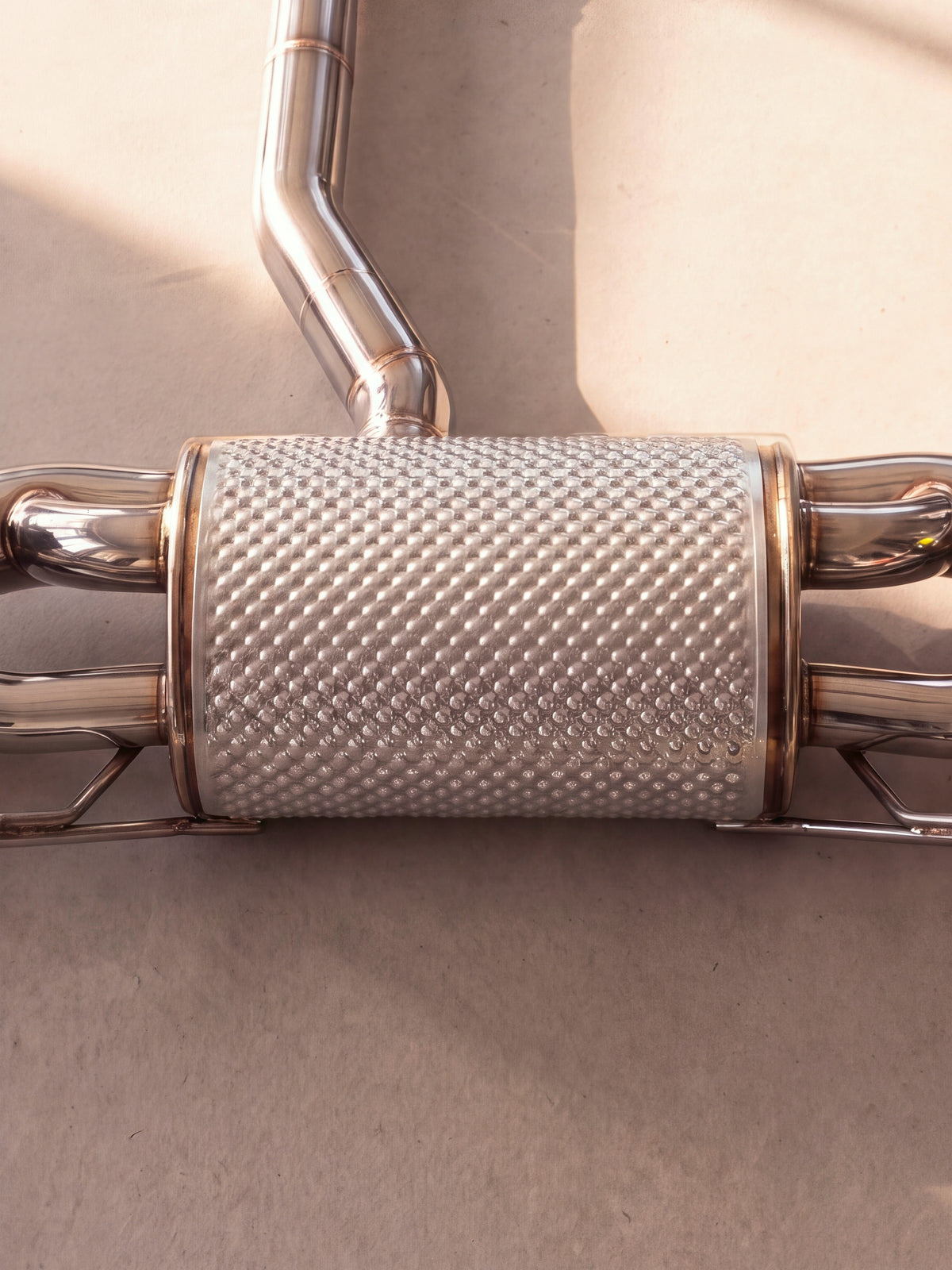
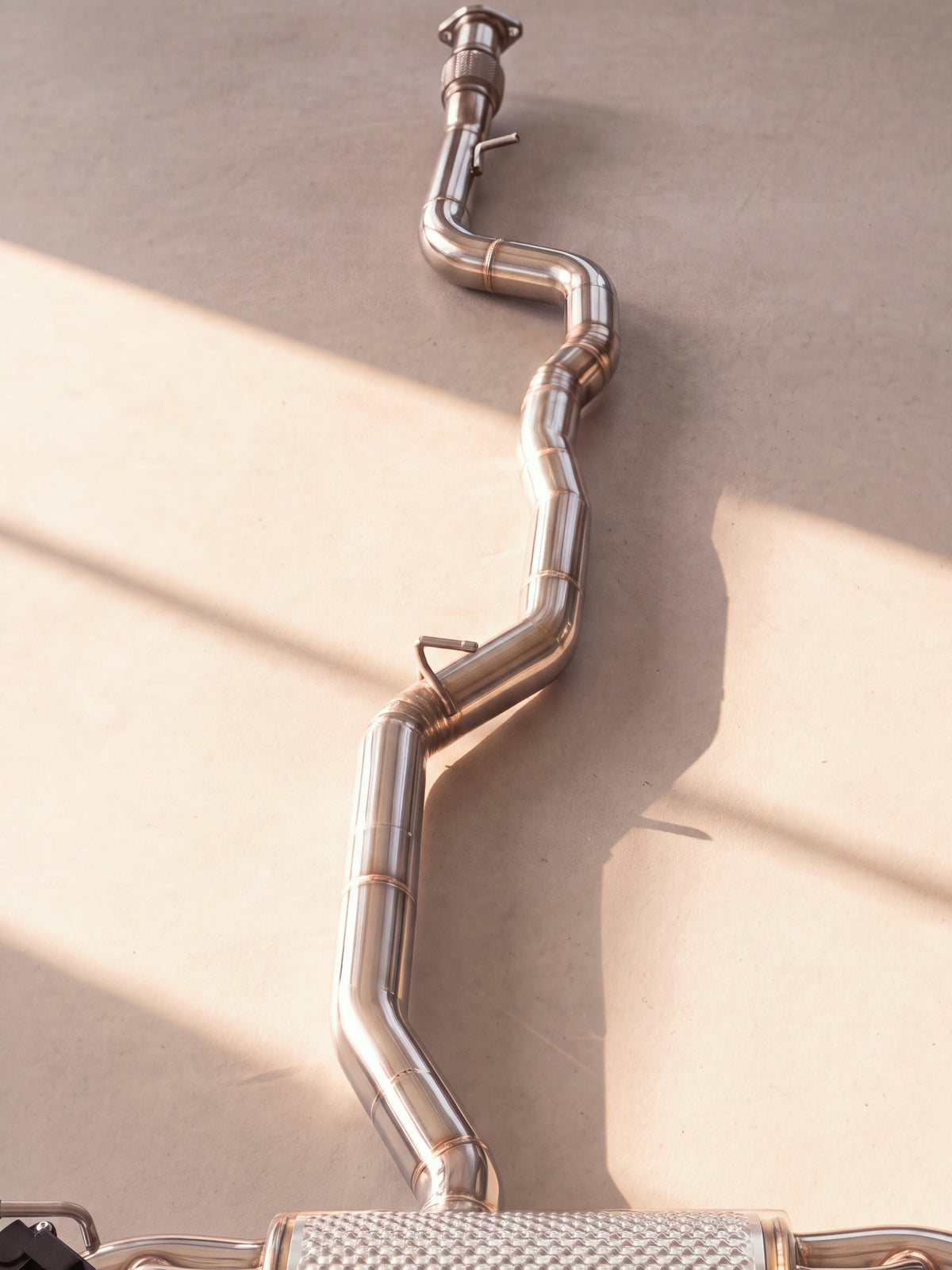
Alfa Romeo Giulia 952 2.0 Turbo Valved Exhaust System (2017-2019)
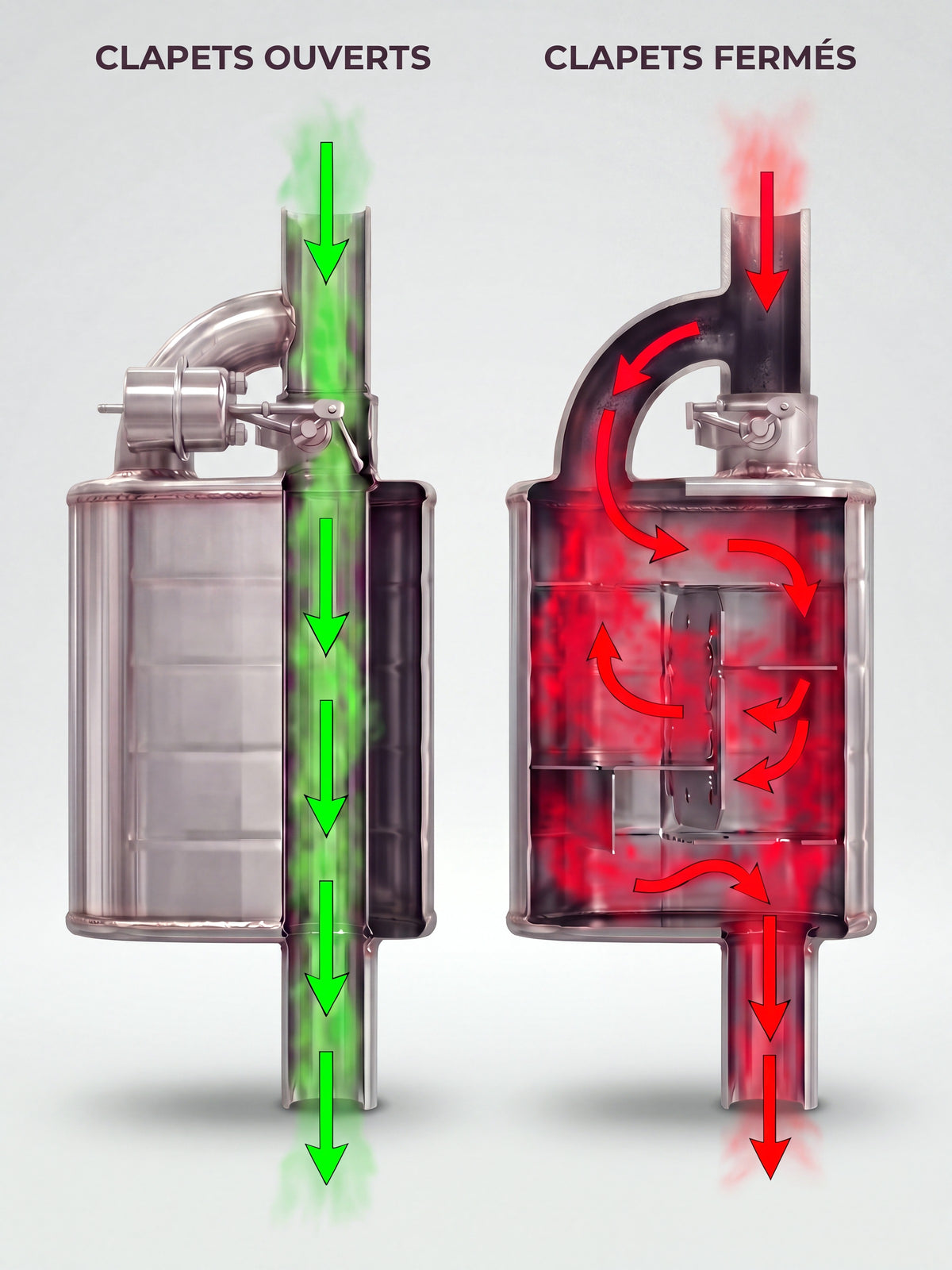
Valves
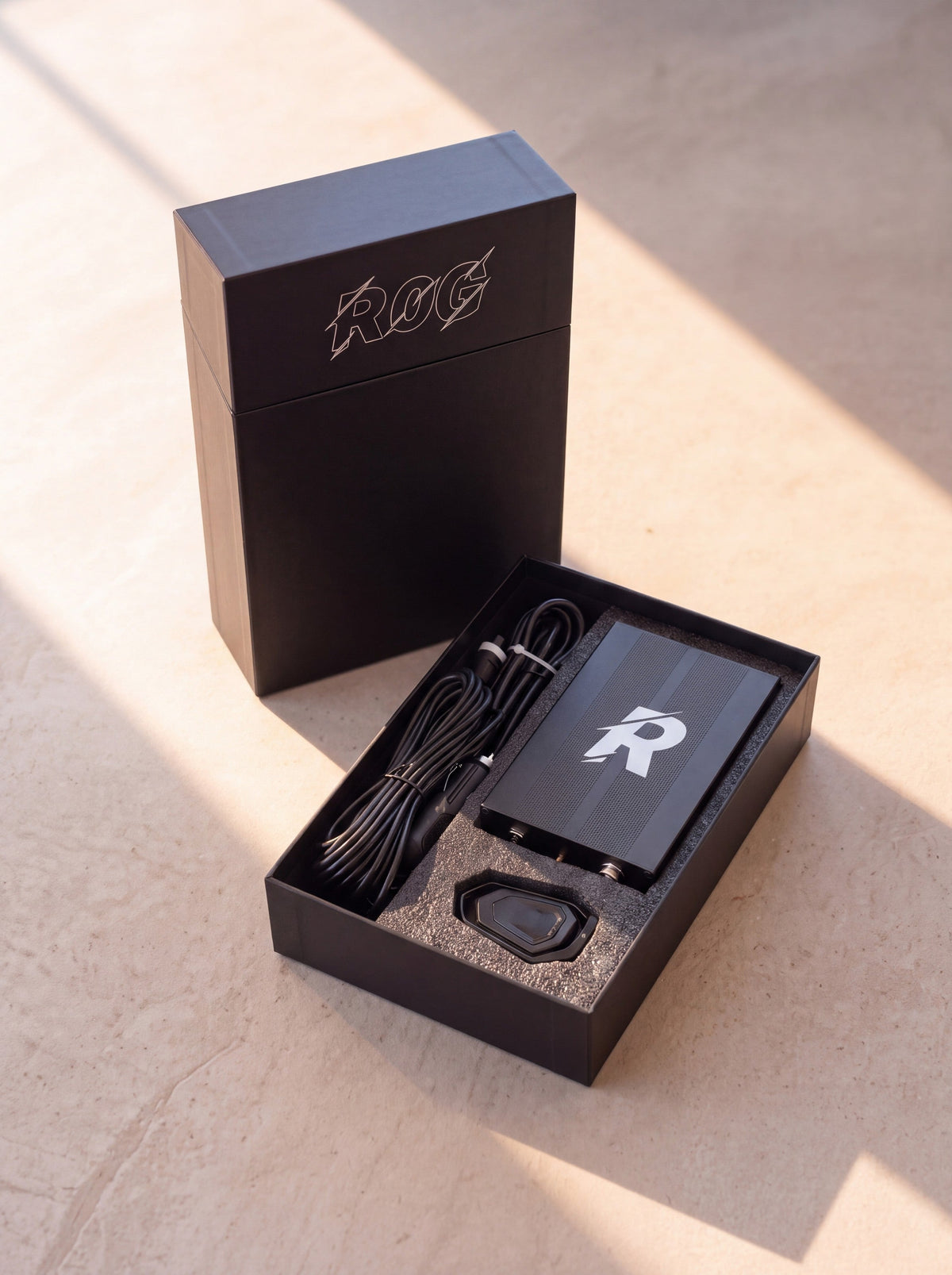
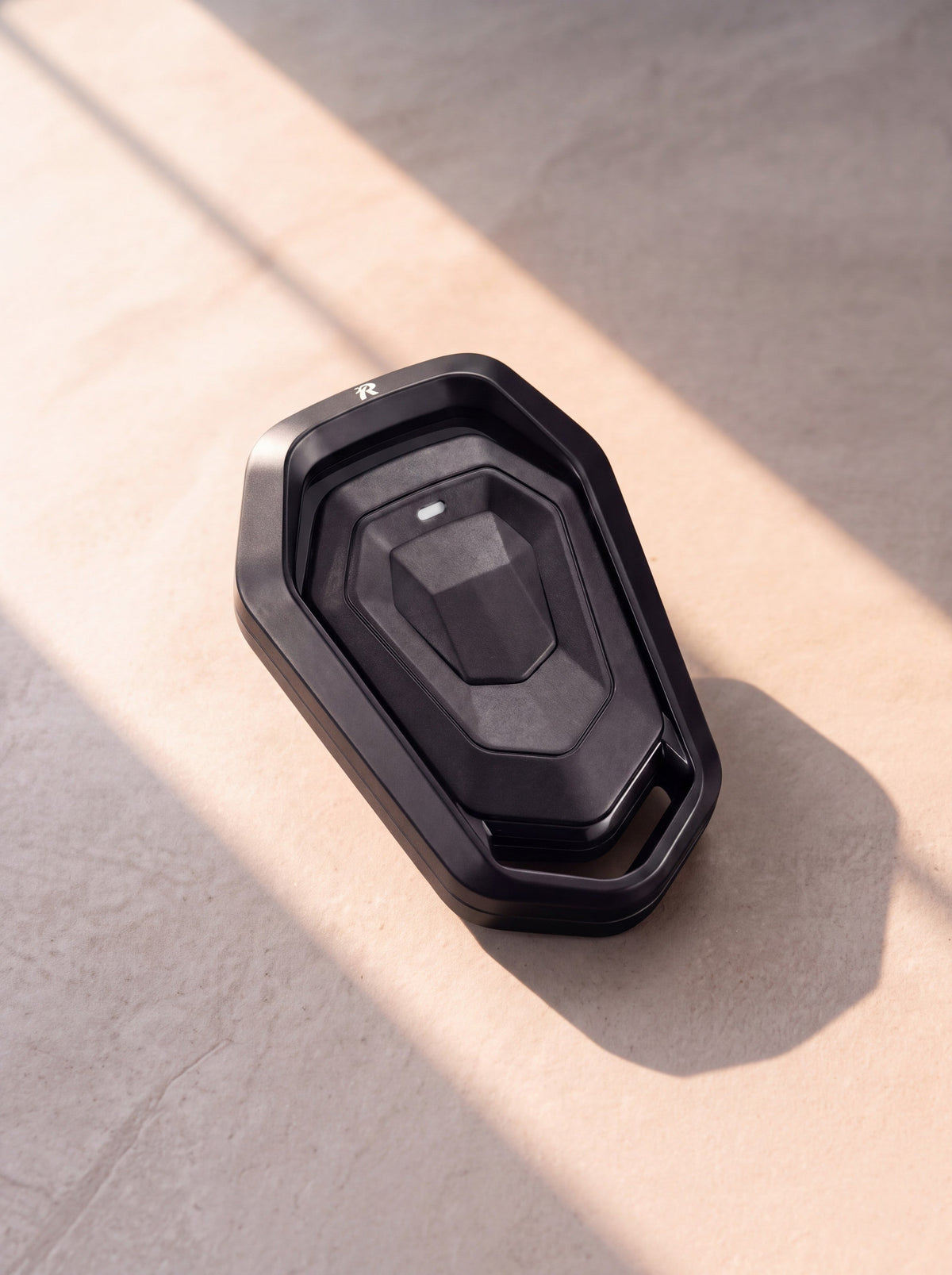
Operated by remote control, factory-paired.
Estimated at 0.50 m from the outlet, 45°, 2,000 rpm with a warm engine. Allow ± 2 dB depending on the engine and measuring point. A 3 dB difference is audible in a direct comparison; 10 dB sounds roughly twice as loud.
Configuration guide
Sound intensity with the valves open, on a scale of 0 to 10.
| Configuration | Intensity |
|---|---|
| Decat downpipe + Rog cat-back | 10/10 |
| 100-cell sports catalytic converter + Rog cat-back | 9/10 |
| 200-cell sports catalytic converter + Rog cat-back | 8/10 |
| Rog cat-back only, factory catalytic converter retained | 7/10 |
| Factory exhaust, for comparison | 3/10 |
The Alfa Romeo Giulia 2.0 Turbo exhaust in detail.
Rear-wheel drive with sharp steering, a turbocharged petrol four-cylinder with plenty of depth, and yet almost nothing to hear: that is the paradox of the Giulia 2.0 Turbo. Its factory exhaust filters everything, to the point of making you forget the Biscione on the grille. The valved Rog cat-back gives it back a full, Latin tone, an assertive character under load and crisp crackles on lift-off, then the saloon regains its everyday discretion as soon as the valves close.
The page covers the 952 saloon at both power levels, from 200 hp and 330 Nm to 280 hp and 400 Nm, for the 2017 to 2019 model years: neither 2016 nor more recent cars. The Giulia Quadrifoglio with the 2.9 twin-turbo V6 and the Stelvio 2.0 Turbo each have their own page; your VIN lets us confirm the right system before manufacturing.
Allow about two hours for fitting, using clamps and gaskets and without a single weld, with valves that answer to the factory control if your Giulia has one, otherwise to the Rog remote, whose box slips into the boot. Further upstream, behind the four-cylinder’s turbo, the page sells the downpipe under the “Manifold” option: its 200-cell version keeps emissions control, the 100-cell will be accepted or not depending on the vehicle and your country’s rules, while the decat version is reserved for track use. Fitted without an ECU remap, this part only brings sound and a few kilos less; with a suitable map, the 280 hp Giulia reaches the 326 hp and 483 Nm published in Stage 2. Finally, the system comes in 304 stainless steel or titanium, around 40% lighter, the latter in brushed, gold or purple, with round tips that stay understated beneath the Giulia’s bumper.
Alfa Romeo Giulia 2.0 Turbo exhaust specifications.
| System type | Valved cat-back (valve exhaust), built to your VIN |
|---|---|
| Vehicle and chassis code | Alfa Romeo Giulia 2.0 Turbo, type 952 saloon, 200 and 280 hp versions |
| Engine | 2.0-litre turbocharged petrol four-cylinder, 200 to 280 hp and 330 to 400 Nm depending on the version |
| Years | 2017-2019 |
| Materials and finishes | 304 stainless steel or titanium; titanium in brushed, gold or purple |
| Valves | Factory valve control if the car has it, otherwise the Rog remote |
| Front section (option) | Downpipe with 200-cell or 100-cell catalytic converter, or decat (“Manifold” option on this page) |
| Fitting | Clamps and gaskets, no welding, about 2 hours |
| Manufacturing and delivery | Made to order, 20 working days, free delivery |
| Warranty | 3 years, parts and workmanship |
Questions about the Alfa Romeo Giulia 2.0 Turbo exhaust.
Does a Giulia 952 registered in 2016 or 2020 fall within the period covered?
The system is designed for the 2017 to 2019 Giulia 2.0 Turbo, in both 200 and 280 hp form. For a neighbouring model year, do not buy blind: send us your VIN and we check before manufacturing. The Quadrifoglio has its own page.
After fitting, does the Giulia 2.0 Turbo need to go on the dyno for a remap?
No, the cat-back leaves the ECU as it is. An ECU remap only makes sense with the downpipe: it is this pairing that takes the 280 hp version to the 326 hp and 483 Nm published for Stage 2.
Alfa Romeo Giulia 952 2.0 Turbo with a Rog exhaust: what should you know about vehicle inspection?
Close the valves before the test: the saloon returns to a sound level close to how it left the factory. With the original or 200-cell catalysed downpipe, the catalytic converter does its job; a 100-cell will be judged according to the car and the rules in your country, and the decat version only runs on the track.
Who controls the valves on the Giulia 2.0 Turbo, the factory switch or the remote?
If your Giulia left the factory with valves, the exhaust takes over their control and the selected drive mode keeps deciding. If not, two buttons on the Rog remote are enough to open or close them again, stationary or on the move.
On the motorway, at a steady speed, does the Giulia 2.0 Turbo drone?
With the valves closed, no: the cabin stays calm, just as with the standard exhaust. The Latin character returns as soon as you open them again, for a mountain pass or a brisk motorway merge.
Rog expert guide
Best valved exhaust for Alfa Romeo Giulia 2.0 Turbo (952)
For an Alfa Romeo Giulia 2.0 Turbo, the best valved exhaust is the one made to your VIN, with a sound you choose, so that the saloon finally has a voice to match its character. That is what the Rog...
In detail
Rog Advisor
A question about this exhaust?
Fitment, sound, catalyst, valves, delivery: the answer comes straight away, with your configuration in context.
The Rog Advisor is an automated assistant trained on our product pages and answers. For an important decision, write to us: we confirm by e-mail.
Unsure about your configuration? Talk to us before you order. We know your car. Write to us at contact@rogmotorsport.com: we reply in writing, in English, within 24 hours. Email us
Reviews imported from our previous system and translated from French; verified purchases carry the badge.
Rog presentation film: choosing your vehicle, Standard or Equal Length design, stainless steel or titanium, Z-Pipe, controlled valves, titanium and tip finishes, and support from choosing your configuration through to shipping.

THE Rog CRAFT
Our process.
From the first bend to the last check. The same care at every step.
-
Design
Designed for your vehicle.
Geometry matched to your model, carefully studied bends and precise mounting points. Everything starts with accurate design.
-
Manufacture
Crafted with precision.
Tube bending, part fitting and TIG welding: every joint receives the same care.
-
Finishing
Material, elevated.
The finish reveals the character of the metal. Stainless steel or titanium, depending on the options available for your vehicle.
-
Assembly
Every part in its place.
Components are assembled and adjusted. On valved systems, the mechanism is fitted, set up and tested.
-
Inspection
Check. Then approve.
Geometry, welds, connections and gas flow: the key points are inspected before shipping.
-
Shipping
Ready to join you.
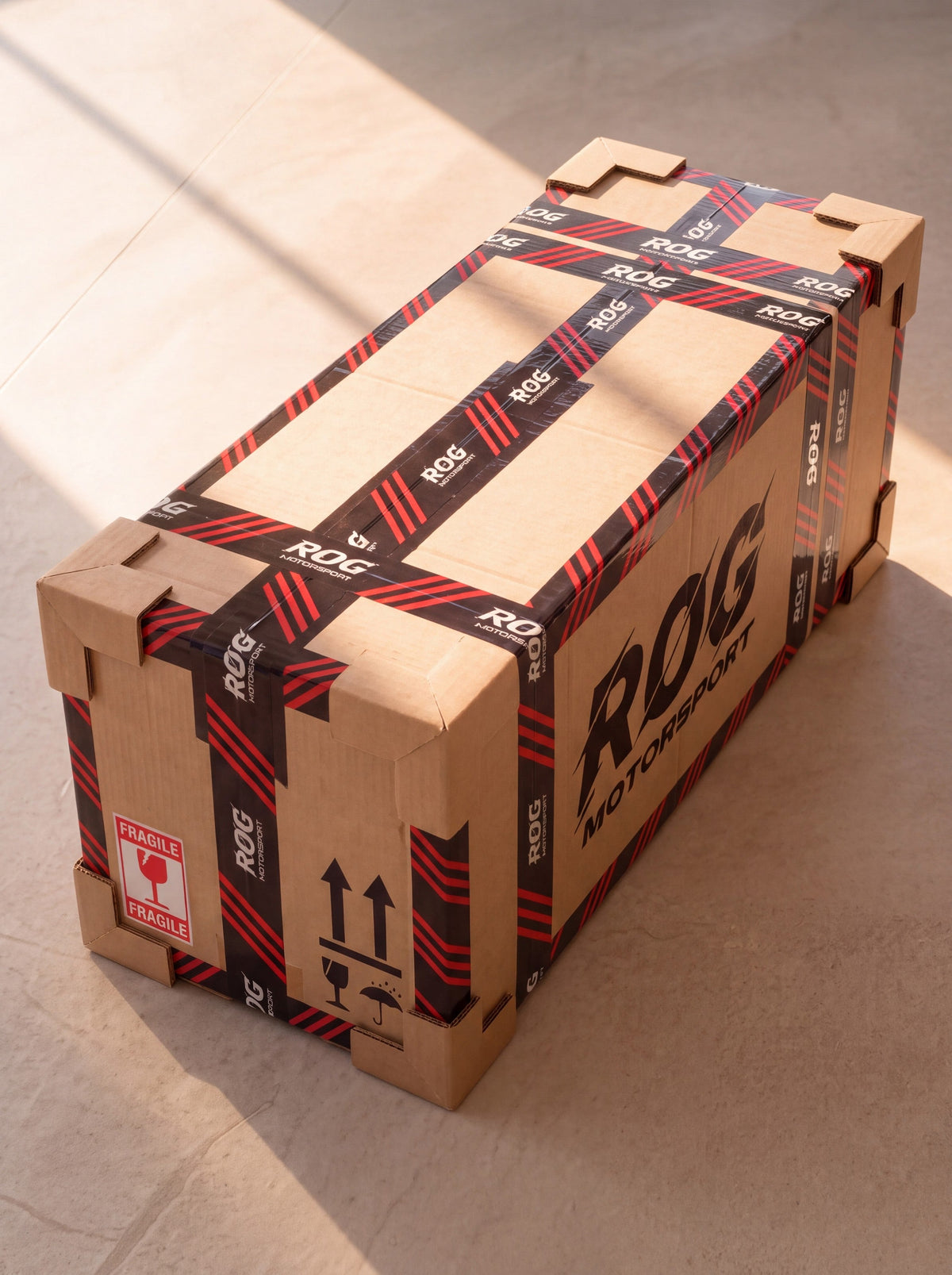
Reinforced packaging protects your exhaust in transit. The final step before giving your vehicle a new voice.
Customer builds
Your videos & photos
The Rog lines fitted on our customers' vehicles, in real conditions.


- Builds
- 500+
- Brands
- 28
- Satisfaction
- 4,9
The journal
News & advice
Best valved exhaust for the Audi RS3 8Y
Which valved exhaust for an Audi RS3 8Y? The options compared (sound, material, valves) and the Rog system made to...
Read the articleBest valved exhaust for the Mercedes-AMG A45 / A45 S W177
Which valved exhaust for a Mercedes-AMG A45 or A45 S W177? The options compared (sound, material, valves) and the Rog...
Read the articleBest valved exhaust for the BMW M2 G87
Which valved exhaust for a BMW M2 G87? The options compared (sound, material, valves) and the Rog system made to...
Read the articleExhaust rules: what changes in 2026 and 2027 (Euro 7, noise cameras, MOT)
Euro 7, new-car noise, noise cameras, MOT and vehicle inspection, and models: what really changes in 2026 and 2027 for...
Read the articleChanging your exhaust: what inspections and approvals cost in 9 countries
What the periodic inspection and the check of a modification cost after changing your exhaust, in 9 European countries: official...
Read the articleIs a cat-back exhaust legal in Ireland? What the NCT checks.
A cat-back leaves your factory cat, sensors and OBD as they are; valves closed, very close to stock, valves open,...
Read the articleSports exhaust (sportsummuti) in Estonia: what the tehnoülevaatus checks.
The sound you choose, a discreet car when it matters: what a Rog valved exhaust gives you in Estonia, how...
Read the articleSports exhaust in Latvia: tehniskā apskate and the CSDD noise limit.
The sound you choose, a discreet car when it matters: what a Rog valved exhaust gives you in Latvia, how...
Read the articleNo article matches this search.
All articles